
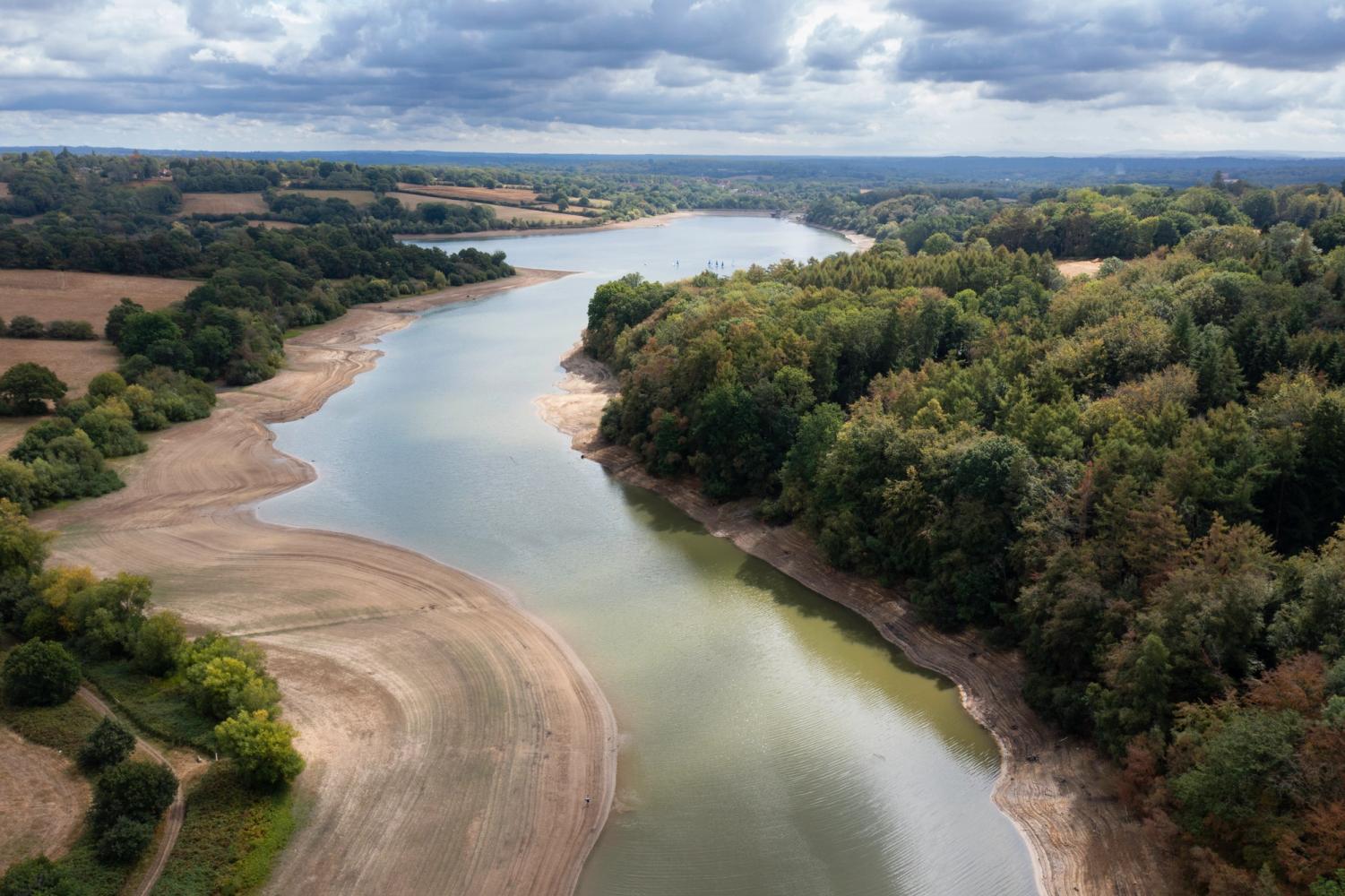
To help us ensure there's enough water for everyone, we have applied to the Environment Agency (EA) for two Drought Permits in Sussex. These changes are designed to minimise impacts to the environment.
When we are in drought and water resources are under pressure, a Drought Permit can allow us to amend the conditions of the water abstraction licenses that set out how we take water from natural water sources like rivers and aquifers (underground layers of rock that hold water).
On Friday 13 November we applied for a Drought Permit to make a temporary change to help us refill Arlington Reservoir as a precautionary measure. This is now out for public consultation, which closes on 20 November. After this time the EA will review the application, any objections received and make a decision.
On Friday 28 August we applied for a permit to make two temporary changes for Ardingly Reservoir. The permit was granted on Tuesday 29 September.
Find out more about each permit application below.
Arlington Drought Permit
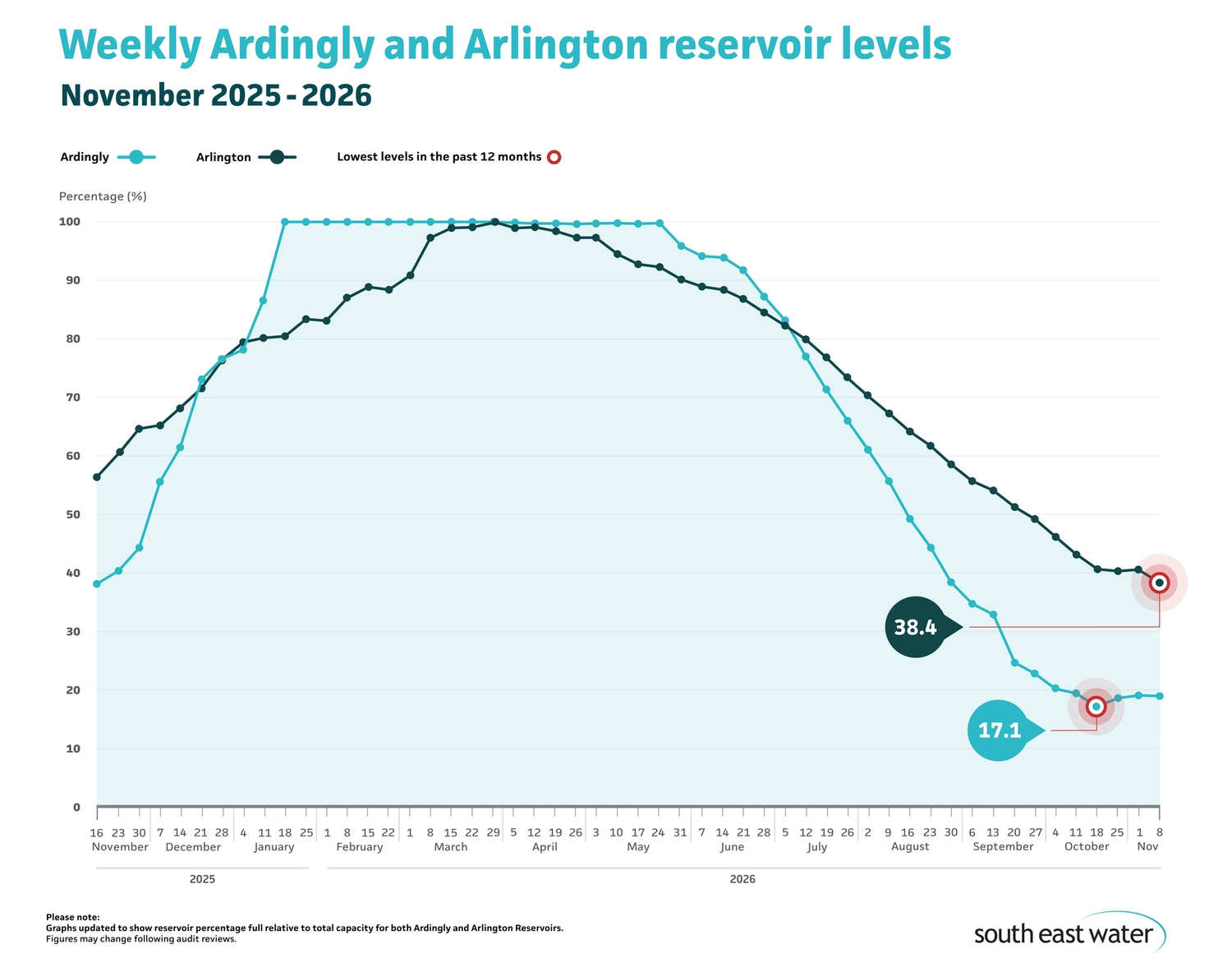
After record hot and dry weather during the spring and summer, autumn so far has been drier than usual with the area around Arlington Reservoir only receiving 59 per cent of expected rainfall across September, October and so far in November (up to 9 November). This has left the reservoir lower than we would typically expect at this time of year.

As a precautionary measure in case we continue to see drier weather, we have applied for a Drought Permit, which would make one temporary change to the abstraction licence which controls how we refill the reservoir:
- Reduce the minimum flow of water that must remain in the River Cuckmere downstream of our abstraction point
This would allow us to take more opportunities to refill the reservoir over the winter period to protect drinking water supplies next year. This approach is designed to minimise impacts to the environment.
We monitor the water quality and environment of the River Cuckmere closely and have a mitigation plan in place for the duration of the permit, if granted and implemented.
We also work closely with stakeholders in the catchment such as Natural England and the South East Rivers Trust and they are aware of the plans we have regarding this permit.
What happens now?
Now that we have applied, anyone may view the application, either by clicking the button below or at the addresses below during normal working hours (9am to 4pm), until Friday 20 November.
- Arlington Fishing Lodge, Station Road Berwick East Sussex BN26 6TF
- South East Water, Rocfort Road, Snodland, Kent ME6 5AH
Objections may be made to the Environment Agency quoting the name of the applicant and reference NPS/DP/260053 by email to: PSC-WaterResources@environment-agency.gov.uk(opens in a new tab)
Or by post to: Environment Agency, Permitting Support Centre, Water Resources Team, Quadrant 2, 99 Parkway Avenue, Parkway Business Park, Sheffield, S9 4WF.
Objections should be made by Friday 20 September. The response should outline if you are making a formal objection to the proposal and the grounds for the objection.
After 20 November, the Environment Agency will review the application, any objections received and make a decision.
We will update this page with the outcome of the application.
Ardingly Drought Permit
The weather in 2026 has been exceptional. The Met Office is saying it is likely to be the warmest summer on record(opens in a new tab) and we’ve had the driest July since records began 190 years ago. We’ve also seen the highest daily demand for water in recent years and recurrent heatwaves with 35-degree celsius (and above) temperatures reached in four separate calendar months (May, June, July and August).
Ardingly Reservoir is also very low, and the area it supplies has been declared as being in Severe Drought by the EA. Therefore, we needed to look at other ways to protect water supplies, including utilising this Drought Permit, granted on Tuesday 29 September..
The permit allows us to make two temporary changes:
- Reduce the amount of additional water we must release from Ardingly Reservoir into the Shell Brook tributary of the River Ouse, to help us keep more water in the reservoir.
- Reduce the minimum flow of water that must remain in the River Ouse after we’ve taken water from the river to keep your taps flowing.